Offer Stacking Unpacked: Sequential Bonuses and Their Effect on Player Behavior
Written by Klara Peters · Aug 19, 2026

Offer Stacking Unpacked: Sequential Bonuses and Their Effect on Player Behavior
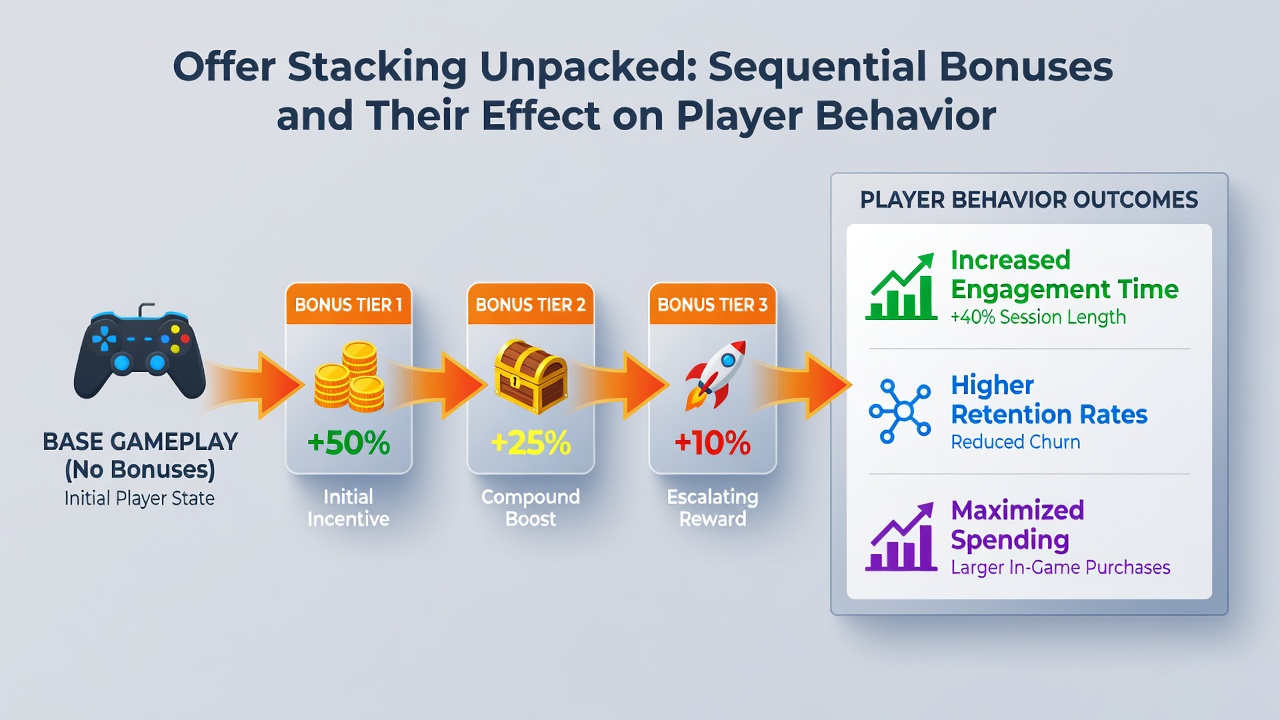
Sequential bonuses operate as layered incentives that players activate one after another rather than all at once, and data from multiple markets shows these structures shape deposit frequency along with session length in measurable ways. Operators design them so that each completed requirement unlocks the next reward tier, creating a chain that can span days or weeks depending on wagering conditions.
How Sequential Bonus Structures Function in Practice
Players typically encounter these offers through welcome packages divided into stages, reload sequences tied to recurring deposits, or loyalty ladders that progress based on accumulated activity. Each stage carries its own playthrough threshold, and meeting one stage automatically qualifies the account for the subsequent reward without requiring a fresh opt-in. Research from academic sources indicates that this progression mechanic correlates with higher total deposit volumes over a defined period compared to single-bonus campaigns.
Turnover requirements often increase with each successive bonus, which means players must maintain consistent activity to reach the final tier. Observers note that accounts using stacked sequences show elevated average bet sizes during the middle stages, while early stages tend to feature more conservative wagering patterns as players test the mechanics.
Documented Patterns in Player Activity
Studies tracking account-level data reveal that sequential offers extend the time between a player's first and last deposit within a single promotional cycle. One analysis of multi-stage programs found participants completed an average of 3.2 additional deposits after the initial funding event, whereas single-bonus recipients averaged 1.8. Session duration also lengthened, with median playtime rising from 47 minutes to 68 minutes once the second bonus unlocked.
Geographic differences appear in how these patterns manifest. Data compiled by Gambling Research Australia indicates that players in that region respond to longer-duration sequences by spacing deposits across more calendar days, while North American samples tracked by state-level regulators show tighter clustering of activity around each new tier release.
Retention and Spending Metrics Across Markets
Retention figures collected by the National Council on Problem Gambling in the United States point to a 14 percent higher 30-day return rate among accounts that completed at least two stages of a sequential offer. The same dataset shows that total handle generated during the promotional window increased by roughly 22 percent relative to control groups exposed to flat bonuses. These outcomes hold after adjusting for player tenure and prior deposit history.
European operators reporting to the European Gaming and Betting Association have recorded parallel trends, although the magnitude varies by product vertical. Sports betting sequences produced smaller uplifts in handle than casino sequences, yet both categories demonstrated extended account lifespans once the full bonus chain concluded.
Regulatory and Research Perspectives in August 2026
By August 2026 several oversight bodies outside the United Kingdom had begun requesting granular reporting on multi-stage promotional mechanics. Regulators in Australia and select Canadian provinces asked operators to segment player data according to the number of sequential tiers accessed, seeking clearer visibility into whether progression structures influence expenditure velocity. Academic teams at institutions such as the University of Sydney have published preliminary findings linking sequence length to changes in loss-chasing indicators, though these studies emphasize correlation rather than causation.
Industry reports note that operators adjust bonus parameters frequently in response to observed player cohorts. Shorter sequences with modest per-stage requirements tend to generate steadier but lower-volume activity, whereas extended chains produce spikes followed by cooling-off periods once the final reward is claimed.
Conclusion
Sequential bonus structures continue to influence measurable aspects of player behavior, including deposit cadence, session length, and short-term retention across multiple regulated markets. Available data from academic and governmental sources show consistent directional effects even as absolute magnitudes differ by jurisdiction and product type. As reporting requirements evolve, further segmentation of these patterns will likely refine understanding of how chained incentives interact with existing player profiles.